
Ever found yourself drowning in shame, panic, or despair seemingly out of nowhere?
Maybe someone’s tone of voice sets something off inside you, or you make a small mistake and suddenly feel like a complete failure, unworthy of love or belonging.
No clear memory. No obvious trigger. Just an emotional landslide that feels impossible to stop.
While both emotional flashbacks and panic attacks can involve overwhelming emotions and distressing physical responses, they originate from different sources. Panic attacks are immediate reactions to current stress or anxiety, contrasting with emotional flashbacks that stem from past trauma.
These intense emotions stem from emotional flashbacks, and if you have complex PTSD (CPTSD), you probably know them all too well.
Unlike traditional PTSD flashbacks, which replay a traumatic event like a movie in your body, CPTSD emotional flashbacks don’t come with a visual or sensory memory.
They show up as raw, overwhelming feelings: shame, terror, grief, rage.
Flung straight from the past into your present-day reality.
Intrusive thoughts can surface during these emotional flashbacks, indicating the intensity and debilitation experienced by individuals who have undergone a traumatic event.
And the worst part? They feel real.
Like the way you feel in that moment is proof that you’re broken, doomed, or just too much for the world to handle.
But that’s not the truth. And you are not broken.
These intense emotions can feel like panic attacks but managing flashbacks is possible.
So, What Does an Emotional Flashback Feel Like — And How Long Do Emotional Flashbacks Last?
If you’ve ever wondered what does an emotional flashback feel like, the answer is: intense, confusing, and deeply overwhelming. Emotional flashbacks can trigger sudden waves of shame, fear, helplessness, or anger—without a clear memory to explain them.
You might feel like a small child again, powerless and desperate for safety, even if nothing in the present moment seems threatening. Your body might tense, your thoughts might spiral, and your nervous system goes into survival mode—fast.
These feelings typically stem from traumatic memories when your body is expressing unnecessary danger signals.
So how long do emotional flashbacks last? The truth is, it varies. Some flashbacks may last only a few minutes, while others can stretch into hours or even days if they aren’t recognized and interrupted. The good news? The more you learn to identify emotional flashbacks early and respond with grounding techniques and self-compassion, the shorter and less intense they become over time.
Emotional flashbacks aren’t permanent. They are a signal, not a sentence. With complex trauma support, your nervous system can learn to return to safety more quickly and reliably.
What an Emotional Flashback Actually Is
An emotional flashback is your nervous system reacting to a past trauma as if it’s happening now, in the present moment.
The emotions you felt during those early experiences- fear, powerlessness, unworthiness- get reactivated, flooding your body before your rational mind even has a chance to catch up
Recognizing triggering mental processes is crucial to prevent dangerous situations and promote psychological safety during recovery.
This is what makes emotional flashbacks so confusing. There’s often no conscious memory attached, just a gut-wrenching emotional storm that makes no sense in the context of what’s actually happening.
How Emotional Flashbacks Show Up
If you're experiencing an emotional flashback, you might:
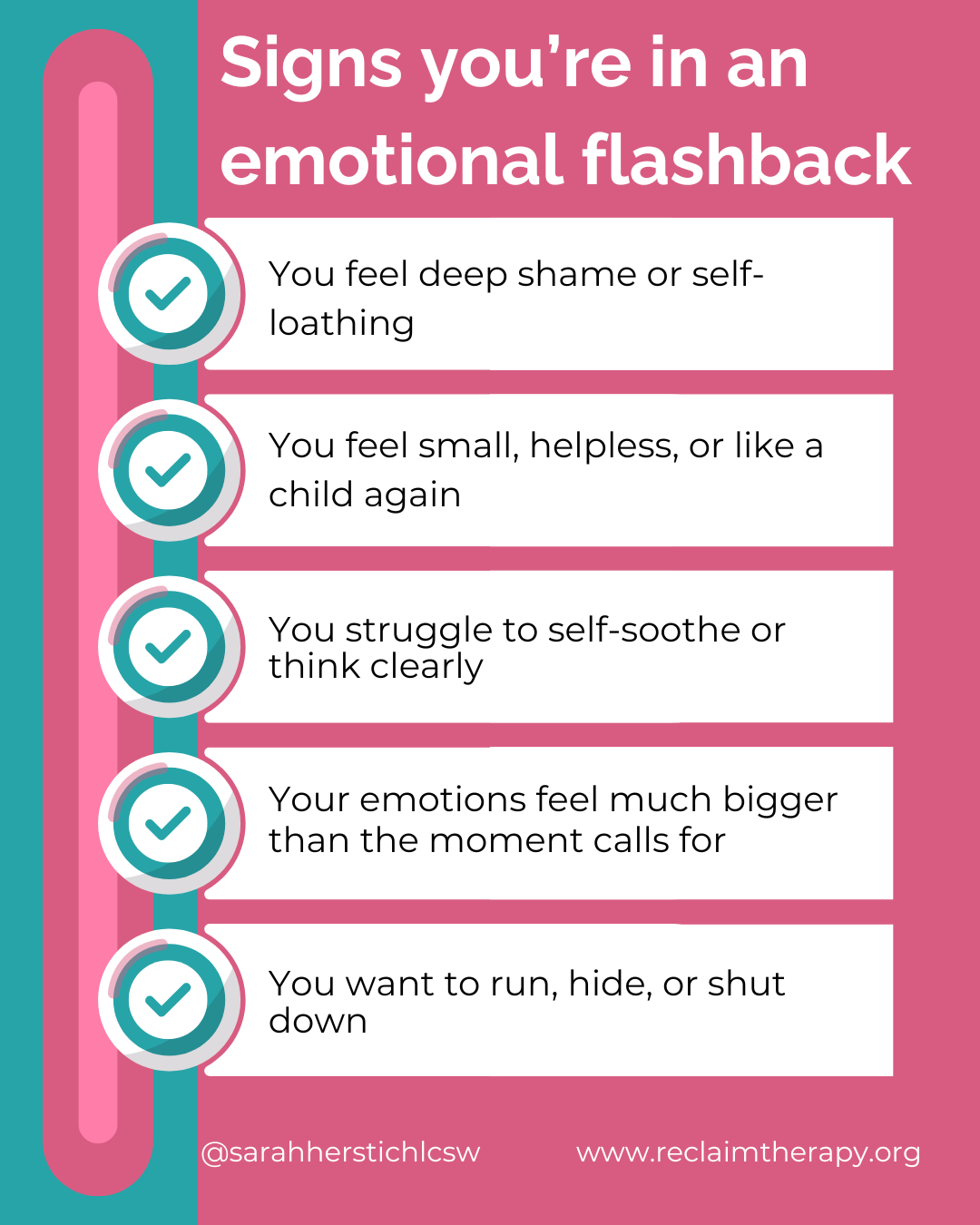
Feel an intense wave of shame and suddenly believe you are fundamentally flawed.
Feel small, helpless, or like a child again, even if the situation isn't threatening.
Become overcome with fear, panic, or dread, as if something terrible is about to happen.
Want to run, hide, or disappear, even though no actual danger is present.
Experience intense anger or despair that feels bigger than the moment calls for.
Struggle to think clearly or self-soothe, no matter how much you try to "calm down."
If any of this sounds familiar, you're not crazy. You're not overreacting. You're having a nervous system response to old wounds that haven't fully healed.
Understanding the Freeze and Flight Responses in Emotional Flashbacks
When an emotional flashback takes over, your body instinctively shifts into survival mode. For many trauma survivors, this shows up as a freeze response or flight response—even when there’s no actual danger present. These are two common nervous system reactions to threat:
The freeze response can feel like emotional paralysis. You might shut down, feel disconnected from your body, or be unable to speak, move, or think clearly. It’s your nervous system’s way of trying to keep you safe when fight or flight isn’t an option.
The flight response might look like suddenly needing to escape—leaving a conversation, overworking, cleaning compulsively, or mentally checking out. It's a protective attempt to avoid the emotional intensity bubbling under the surface.
Both of these are natural reactions to trauma, and they often happen when unexpressed feelings—like fear, sadness, or anger—are stuck in the body. If your emotional experience wasn’t validated or safely processed in the past, your nervous system may still be holding onto that distress.
Healing means gently creating space for those feelings to emerge and be witnessed—without judgment or urgency. Through somatic therapy, grounding practices, and support from trauma-informed professionals, you can learn to safely process your emotional experiences, complete these survival responses, and reconnect with a felt sense of safety in your body.
Why Emotional Flashbacks Happen
When you’ve lived through chronic trauma, especially in childhood, your brain and body adapt to keep you safe. If you were neglected, criticized, or made to feel unlovable, your nervous system learned to be on high alert for anything that even slightly resembles those experiences.
Your brain doesn’t ask, “Is this situation actually dangerous?”
It asks, “Does this feel like something dangerous I’ve been through before?”
And if the answer is yes, it reacts instantly. Flipping into survival mode and pulling you straight into an emotional flashback.
Emotional flashbacks reveal unhealed wounds and unmet developmental needs stemming from past abuse.
That’s why an unanswered text, a neutral facial expression, or a minor rejection can feel earth-shattering.
The intensity of the reaction isn’t about this moment. It’s about every past moment it reminds your nervous system of.
The Role of the Inner Child
Understanding how past experiences influence present emotions.
The inner child plays a significant role in emotional flashbacks, as past experiences and traumatic events can shape present emotions and behaviors. Emotional flashbacks can be triggered by situations that remind the individual of past trauma, causing them to feel like they are reliving the experience. This can lead to intense emotions, such as fear, shame, and anxiety, which can be overwhelming and difficult to manage.
Understanding the inner child and how past experiences influence present emotions is crucial in managing emotional flashbacks and developing effective coping strategies. By acknowledging and working through past trauma, individuals can begin to heal and develop a more compassionate and supportive relationship with their inner child. This can involve recognizing and challenging negative self-talk, practicing self-compassion, and developing a greater sense of self-awareness.
Mental health professionals can provide guidance and support in this process, helping individuals to develop a more positive and empowering relationship with their inner child.
The Impact on the Adult Body
Recognizing physical manifestations of emotional flashbacks.
Emotional flashbacks can have a significant impact on the adult body, manifesting as physical symptoms such as tension, pain, and fatigue. These physical symptoms can be a result of the body’s stress response, which is triggered by the perceived danger or threat associated with the traumatic event. The sympathetic nervous system is activated, causing the body to prepare for fight or flight, and this can lead to a range of physical symptoms, including rapid heartbeat, sweating, and trembling. Recognizing these physical manifestations of emotional flashbacks is essential in managing them, as it allows individuals to take steps to calm their body and reduce their stress response. This can involve practicing relaxation techniques, such as deep breathing, progressive muscle relaxation, and mindfulness, as well as engaging in physical activity, such as yoga or walking, to help reduce tension and promote relaxation. By acknowledging and addressing the physical symptoms of emotional flashbacks, individuals can begin to manage their symptoms and develop a greater sense of control over their body and emotions.
How to Get Through an Emotional Flashback Without Drowning in It
Healing from CPTSD emotional flashbacks isn’t about making them disappear overnight. It’s about learning to recognize them for what they are and respond in a way that soothes your nervous system instead of reinforcing fear and shame.
Managing flashbacks involves various techniques to reduce the impact of intrusive memories, which is crucial for emotional recovery.
1. Call It What It Is
The moment you realize you’re in an emotional flashback, name it.
“This is an emotional flashback. I am not in danger.”
“This feeling is coming from the past, not the present.”
“I am safe right now, even if my body doesn’t feel that way.” (Grab our Grounding Guide here!)
Grounding oneself in the present moment is crucial for managing emotional distress and coping with flashbacks.
This simple step creates a little distance between you and the emotion, making it easier to step out of the spiral.
2. Ground Yourself in the Present
Your body thinks it’s in the past. Your job is to remind it where and when you actually are.
Grounding techniques help individuals focus on calming physical sensations to remain present during traumatic recalls.
Try:
Pushing your feet into the ground and feeling the pressure.
Naming five things you see, four things you feel, three things you hear.
Running cold water over your hands or holding an ice cube.
Saying out loud: “Today is [date]. I am [age]. I am in my home, not my past.”
3. Soothe the Part of You That Feels Unsafe
Many CPTSD emotional flashbacks are rooted in childhood experiences of fear, rejection, or abandonment. The younger parts of you that experienced that trauma are the ones reacting now.
Developing self-protection is essential in transforming anger and grief into a defense mechanism against past trauma.
Instead of shaming yourself for “overreacting,” try speaking to yourself the way you wish someone had spoken to you back then:
“I see you. I hear you. You’re safe now.”
“You didn’t deserve what happened to you.”
“You are not too much. You never were.”
Even if it feels awkward or unnatural, this kind of reparenting work can be deeply healing over time.
4. Talk Back to Your Inner Critic
Emotional flashbacks often activate toxic shame, which means your inner critic might start tearing you apart:
“You’re such a mess.”
“No one else struggles like this.”
“You should be over this by now.”
To combat the inner critic's negative thinking patterns and manage unfair self-criticism, consider strategies such as thought-stopping and thought-substitution. Emphasize the importance of self-compassion and reject self-attack.
Instead of taking those thoughts as truth, challenge them:
“This is a traumatized part of me talking. My reality is different now.”
“I am not a mess, I am doing the hard work of healing.”
“There is nothing wrong with me for struggling.”
The more you practice countering shame with self-compassion, the less power your inner critic will have.
5. Move the Energy Through Your Body
Emotional flashbacks live in the nervous system, which means working with the body, not just the mind, can help.
Recognizing and gently relaxing major muscle groups is crucial to reducing tension and anxiety. Tightened muscles can send distress signals to the brain, so focusing on these areas can promote relaxation and body awareness.
Shake it out: Stand up and shake your arms, legs, hands—whatever helps release tension.
Take deep belly breaths: Inhale for four counts, hold for four, exhale for six.
Go for a walk: Rhythmic movement helps the body process and discharge stress.
Building a Support Network
The importance of community and connection in healing.
Building a support network is essential in healing from emotional flashbacks and complex post-traumatic stress disorder (CPTSD). Having a supportive community and connection with others can provide a sense of safety and security, which is critical in managing emotional flashbacks. Supportive relationships can help individuals feel less isolated and more empowered, providing a sense of motivation and encouragement to continue the healing process.
Mental health professionals can play a significant role in providing support and guidance, helping individuals to develop effective coping strategies and work through past trauma. Additionally, support groups and online communities can provide a safe and supportive environment for individuals to share their experiences and connect with others who have gone through similar situations.
By building a support network and cultivating safe relationships, individuals can begin to heal and develop a greater sense of self-compassion and self-awareness, which is essential in managing emotional flashbacks and promoting overall mental health and well-being.
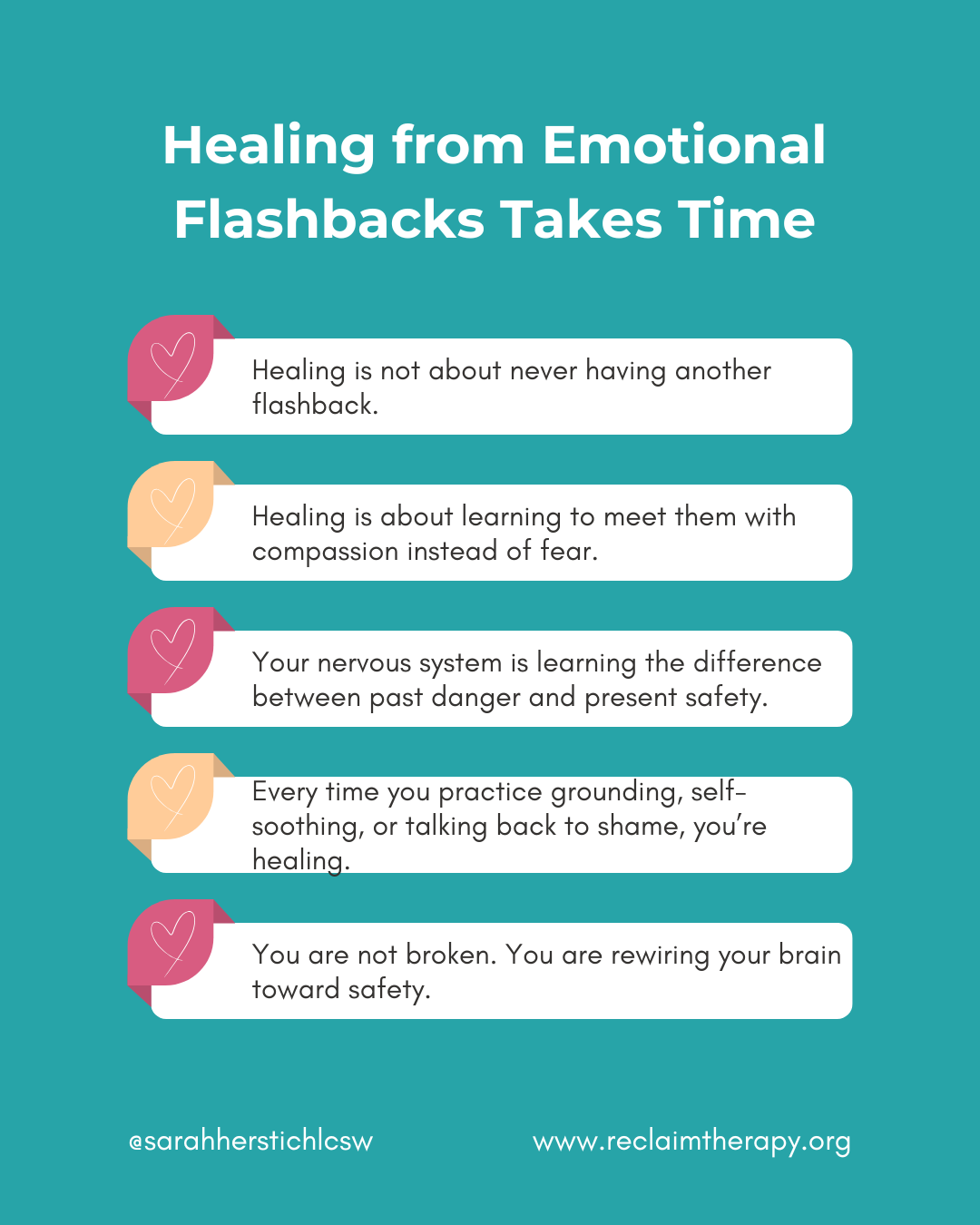
Emotional flashbacks can feel unbearable, but they do not mean you are failing or broken.
They are a sign that your nervous system is still learning how to tell the difference between past danger and present safety.
The more you practice recognizing and responding to flashbacks with compassion instead of fear, the weaker their grip will become.
Healing is not about never having another flashback, it’s about learning how to meet them with understanding instead of shame.
Real recovery from trauma is a gradual process characterized by progress and setbacks.
And if you need support, you don’t have to do this alone.
Trauma therapy, somatic work, and EMDR Therapy can all help you rewire these responses and build a deeper sense of safety in your body.

If this resonates with you, take a breath.
You’re on the right path.
And healing is absolutely possible.🧡,
